
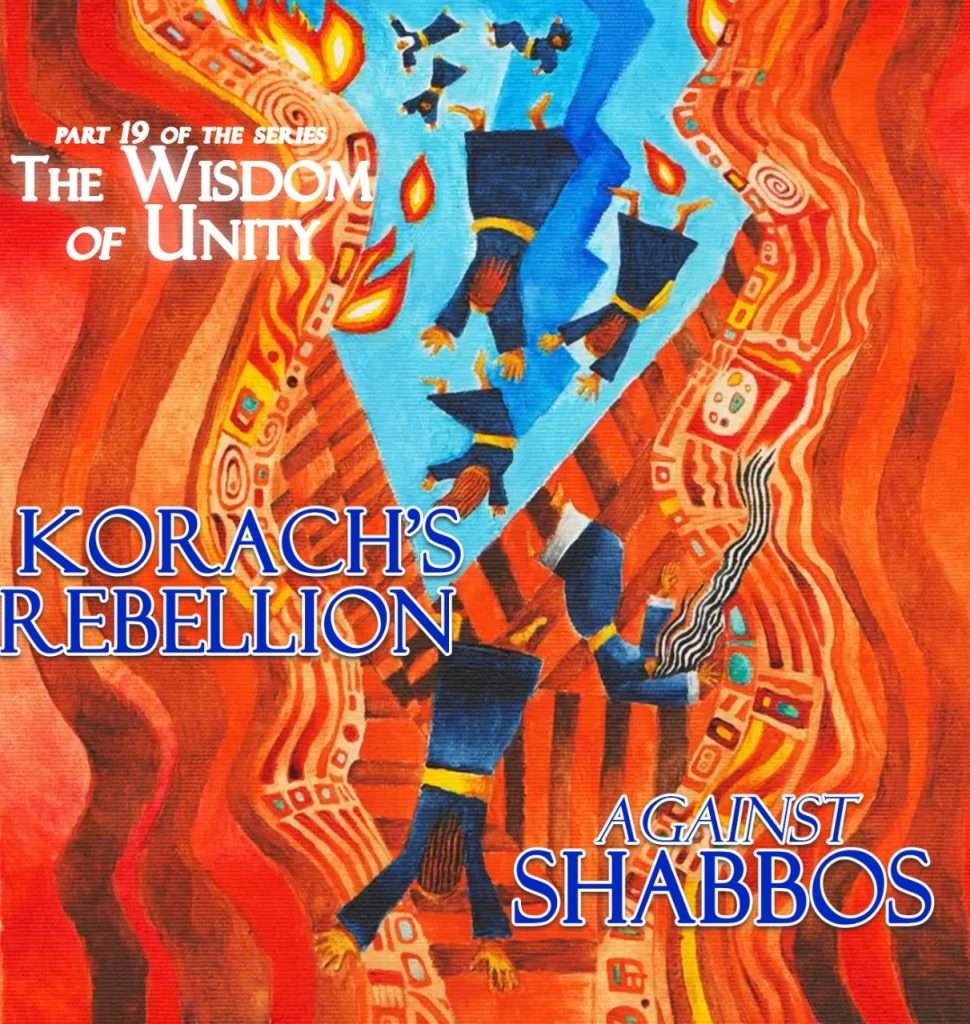
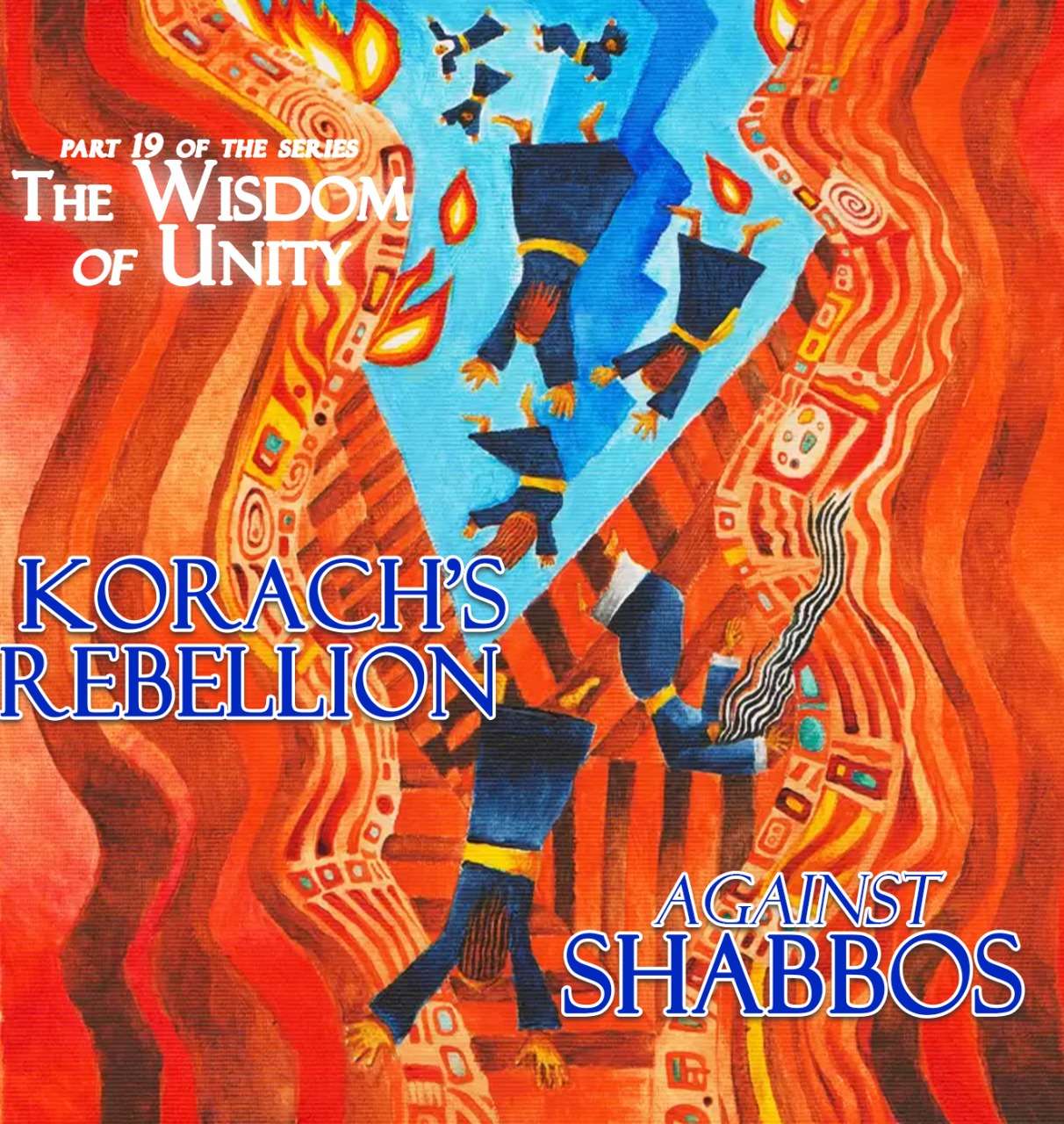
Korach’s Rebellion Against Shabbos
Shabbat Shalom is the beloved greeting used millions of times each week. These two words are both considered names of Hashem. Interestingly enough the Zohar explains that Korach was at war with these two holy entities. Shabbat Shalom!
There was a very difficult dispute between the Chasam Sofer and the children of the Ruzhiner. One of the closest students to the Chasam Sofer was Rav Zalman Leib Teitelbaum, the Yetev Lev. When his fellow Chassidim asked him why he’s not involved in the dispute, he said, although the Rebbe is great, he’s not greater than Moshe Rabbeinu. Then he told the following story.
He explained that as a child, he grew up listening to the stories of his grandfather, the Yismach Moshe, Rav Moshe Teitelbaum, who was very unique in that he remembered three of his previous reincarnations. One of them, living in the midbar after the exodus.
One year, during Parshas Korach, I asked my Zayde, nu, Zayde, which side were you on? And he replied, you can’t imagine what a powerful person Korach was. He had such a large following. He had so much power, and yet on the other side there was Moshe Rabbeinu and Aharon Hakohen. I didn’t know what to do. So I decided that the best way to deal with such division was to stay out of it. I ran and I stayed in my tent until the whole thing was over. And you, my tayere grandson, learn a lesson for life. Wherever there’s a dispute, run after peace because peace is the vessel that holds blessing.
The Zohar in Parshas Korach says an amazing thing about Korach. He was at war with what? With peace. Peace is the name of Hashem, and peace is Shabbos. To understand these words, I’d like to share with you the first piece of Sfas Emes in Parshas Korach. As always, it fits in beautifully with the wisdom of unity.
Says the holy Sfas Emes, what does it mean that Korach rebelled against peace, that’s Shabbos and the name of Hashem? For Hashem is called peace, Shalom, that the whole entire creation is drawn forth from this nekudah, this point of perfection, of peace, which gives lifeforce to all. This is the secret of Shabbos, and those words come from the holy section of the Zohar that we say in Kabbalas Shabbos, that Hashem will not sit on His exalted throne until the whole world becomes unified. That is Shabbos. When the whole world has an elevation, and everything is incorporated into something called the raza d’echad, the secret of oneness.
It’s our obligation to prepare ourselves, unify ourselves, and incorporate ourselves in this holy oneness. It’s impossible to do this without the aspect of nullification. To give yourself over to the community, the Klal, and in doing so a person can have connection. This is peace and this is Shabbos.
Explains the Sfas Emes, and it’s well known, that from the vantage point of Korach, that each and every person merited according to the power of his hands, the amount of exertion that he exerted in the service of Hashem, meaning to say that Korach was coming from the left side, the side of gevurah. Really, this is the secret of the Zohar, that although the power is holy, but it has to be subservient to the aspect of nullification, bitul, the side of Aharon Hakohen, the man of lovingkindness, chesed.
Therefore, the Sfas Emes says the way of Korach was not the ratzon of Hashem, but there’s only one kohen, one High Priest, and one mizbei’ach, one altar. All of our service is to give ourselves over to the Klal, to the community. Even though Korach was right in saying that everyone was holy, but it was all through the power of clinging to the unity of holiness through Aharon Hakohen, who’s called holy, kadosh.
This is the praise of Aharon, as Moshe said, “v’Aharon mah hu,” what is Aharon? His essence was bitul. His essence was that he made himself open to receive the holiness without any airs, for he knew that he was only a vessel to receive holiness from Hashem. Therefore, there was no reason for Korach to be jealous. For the exact opposite, Aharon is total self-nullification. This was Korach’s mistake. He thought the power of his hands was the primary focus, and therefore he was jealous. But if he would have known, if he would have had da’as, been able to see the big picture like Moshe, who knew that it’s impossible for a person to enter into service Hashem only according to his deeds, for if so, no human being could come close to serving the Holy One.
There are three characters in our story. Korach, a man of power, works hard achieving, creating, building. It’s a divine force, but it has to be subservient to the ish hachesed. Aharon, the High Priest, who was chosen from Hashem. And these two divine forces of chesed on the right, lovingkindness, and gevurah, power on the left, are joined together in tiferes, the aspect of shalom, the aspect of Shabbos, the aspect of Moshe.
Our service is to mirror the unity above, the secret of oneness, raza d’echad, chad kabeil chad, unity aligning with unity, when everyone comes together in peace. This is the ultimate alignment, everything connecting back with its source in unity. This is the vessel of peace, and through it all of the works of our hands are blessed. May you have the best Shabbos ever.