
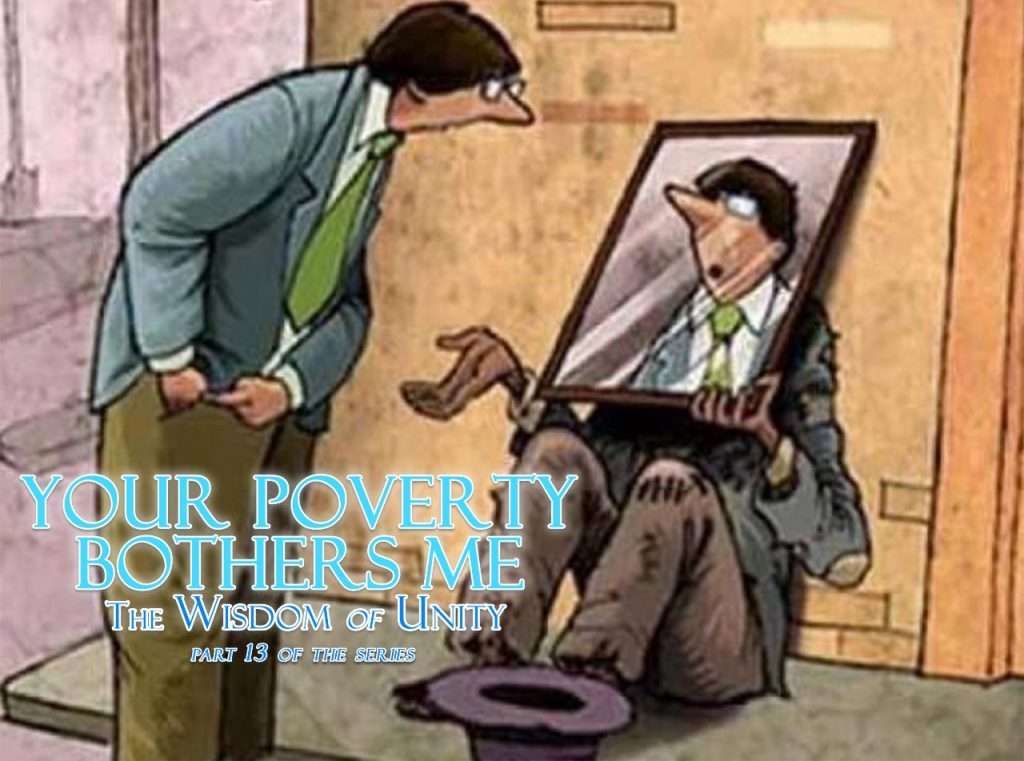
Your Poverty Bothers Me
If God really loves the poor why doesn’t he sustain them? This was the opening question in a fascinating philosophical conversation that took place two thousand years ago between Rebbe Akiva and the Roman governor of Judea. Listen and open your mind to an elevated way to relate to the poor and poverty.
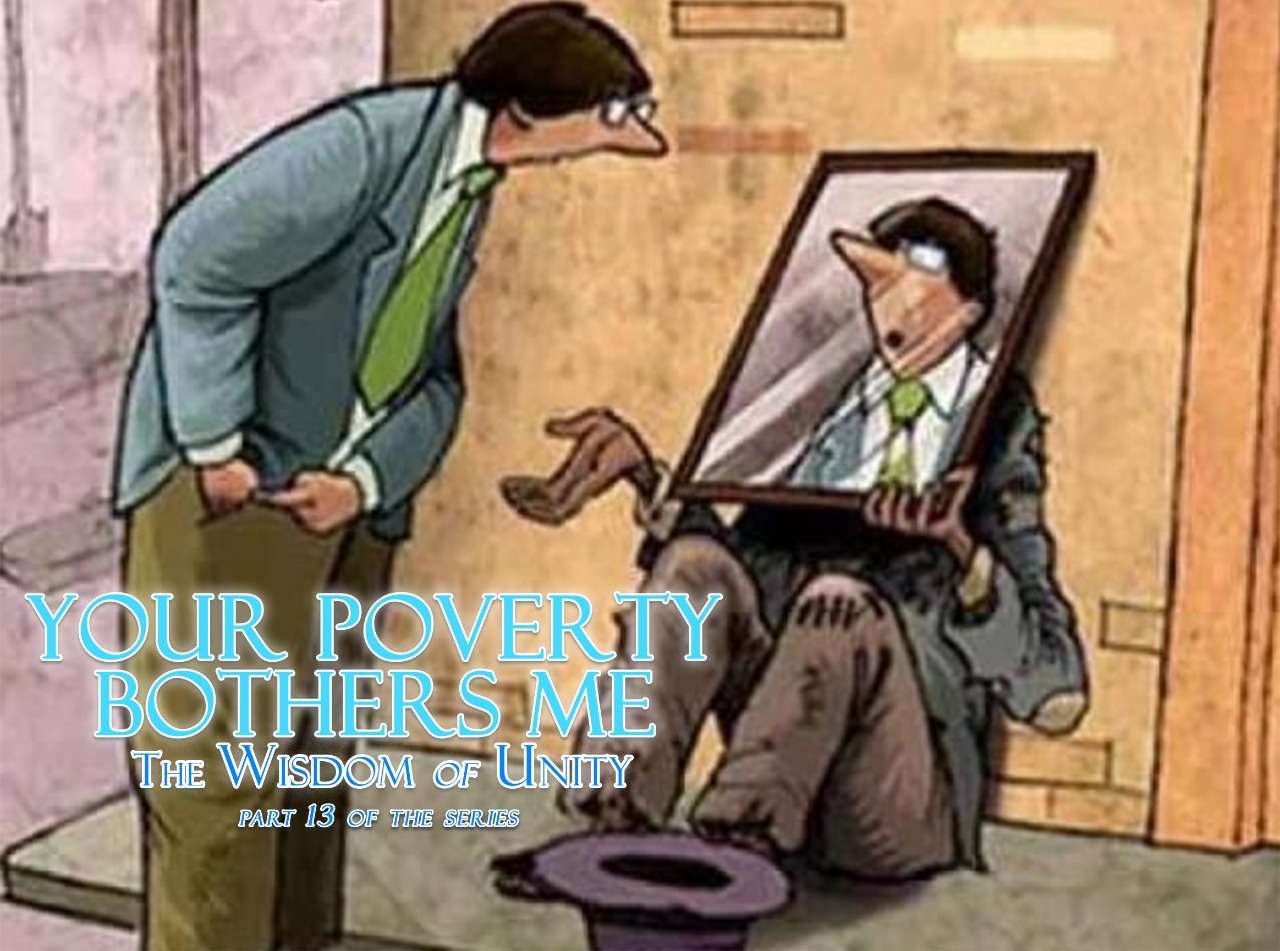
Let’s start with this story, but pay close attention because everything that we’re going to say today is an explanation to this story, and I hope to conclude with something on a personal note.
There was a wealthy man who contributed a lot of money to a certain Rebbe. Like the way of the world, whenever there was a meeting, they invited him to ask his opinion. Unfortunately, a turn of events and he lost all of his money. For some strange reason, they stopped asking him to come to the meetings.
When Erev Rosh Hashanah all of the Chassidim were standing by the door of the Rebbe, everybody wanted to get in, give their names and their pidyonos. The Gabbai is standing at the entrance to the door and people are pushing. Then all of a sudden, the Rebbe’s Gabbai flicked the man’s hat to the other end of the room. The man that once upon a time was wealthy looks at the Gabbai with amazement, so much so. I’m so low in your eyes. The Gabbai said to him, don’t take it personally, I got nothing against you, it’s your poverty that bothers me.
I heard this story from my Rebbe, Rav Tzvi Meir Zilberberg, and it definitely needs explanation. Let’s go to the source of our subject of tzedakah, charity in the Tractate Bava Basra 10a.
There was a fascinating philosophical conversation that took place in the second century between the beloved Rebbe Akiva and the Roman governor of Judea, Turnus Rufus. If your Gd loves the poor, why doesn’t He sustain them? Rebbe Akiva said to him, He does love them, but He wants us to give them charity to give us the merit. As I often say, He created an empty space for us to fill the gap. Be the light.
Turnus Rufus countered and said merit? For that alone, you’ll be punished. He brought a parable of a king who became angry at his servant and put him in the dungeon and instructed not to give him any food or water. Then somebody went and fed him. Wouldn’t the king become angry and aren’t the Jews called servants? As the verse says in this week’s Parashah, Behar, to Me are the children of Israel My servants.
Rebbe Akiva turned around the parable. It’s like a king who got angry at his son, and he locked him away in a dungeon. Then a person came along, he gave him to eat and drink. When the king hears this, doesn’t he want to reward the person? As the verse says, you are children to the Lord your Gd.
This ancient conversation between the world of philosophy and the world of Torah and tzaddikim on the subject of charity, has infinite depth. I would like to continue our discussion on the gevaldik mitzvah of loving your friend like yourself and delve into the question of how do we view poverty? How do we view a poor person? Is a person poor because of his transgressions? If not, why should a poor person suffer because I need merit in the world to come?
Since the beginning of time until today there are those that oppose giving to the poor. How could that be? It’s called survival of the fittest. This world outlook is alive and well today. Check it out for yourself. Sounds cruel? Well, you have to have a soul. You have to have da’as. You have to see the big picture in order to understand the lofty mitzvah of charity which Chazal tell us is weighed against the whole entire Torah, very much like the mitzvah of loving your brother like yourself.
The commentaries in this Gemara, including the Chasam Sofer, Rav Dessler, Rav Chaim Shmuelevitz, all explain that poverty is not necessarily a reflection of transgression, but rather a function of reincarnation, gilgulim and it’s hinted in the main verse on charity. “Nason titein,” and you shall certainly give, and you should have no regrets. “Ki biglal hadavar hazeh,” because of this Hashem will bless you. On this Chazal says, biglal, poverty is a galgal hachozer. It’s like a dreidel. It’s like a circus wheel. Sometimes people on the top and sometimes people on the bottom. In one lifetime, Shmuel is the philanthropist and Berel is the poor man and in another lifetime it’s the exact opposite.
There are poor people that are totally removed from transgression. Those people are not suffering, but rather they choose a life of austerity for the sake of learning Torah. They’re promoting Torah like a person who causes others to give, whose merit is even greater than those that give. They arouse the world to charity, and they are the truly worthy people.
In order to understand how this has to do with the great mitzvah of loving your brother, let us go once again to the teaching of Rebbe Nosson, the laws of loans and interest, number five. A major motif in this teaching from Rebbe Nosson is the concept of multiplicity. In Hebrew, the word is shinuyim, fluctuations. At its root, the word shanah which means a year and also, sheinah which is sleep. This is all hinted in the aspect of time.
As we mentioned before, everything at its root is one, unity, holiness. When Hashem created the world, He created time. In the realm of time is where multiplicity takes place. This is the secret of the verse, “u’b’sevunah,” in His wisdom, He’s “meshaneh itim.” Therefore, different things happen to everyone. Each person’s world outlook is different because of the multiplicity, the shinuyim. Teaches Rebbe Nosson, this is the great mitzvah of charity, tzedakah. As it says, “marbeh tzedakah marbeh shalom,” the more charity, the more peace.
Just like we said last week, love nullifies the multiplicity, so too charity. When a person gives of his money to a poor person, he subjugates and nullifies the grip of the side of darkness that’s latching on to the multiplicity. Once again, Reb Nosson says, this is more dear than anything in the world.
As we see in the world, in the realm of money is where there’s the most conflict and strife. Therefore, in the realm of money a person has to strengthen himself and to subjugate time and to believe that there is no such thing as time. Then a person will be saved from lust of money and worry and anxiety over making a living. For the essential worrying about making a living has to do with time, that a person’s worried about tomorrow. For most people, they have what to eat for today, but the problem is what’s going to be tomorrow. Therefore, the rectification is for a person to bind his da’as to the truth and to believe and to understand in truth that there is no such thing as time.
Time is an illusion. Time is a lack of da’as, for all of our days are vanity and the problem is that this is very lofty, very high, and only someone with da’as can understand this. The truth is time does not exist and when a person has this understanding, he has the power to wait for the salvation of Hashem always. He’s never worried and he always says, Baruch Hashem yom yom, thank you, Hashem, every day.
As Chazal tell us, the one that created the day, he created the sustenance. Therefore, the generous person, the ba’al tzedakah, he takes his money and he gives it to the poor person. In doing so, he nullifies all of the multiplicity and is incorporated back in the unity, back in the oneness of Gd. For he is subjugating the difference between his headspace and that of the poor man’s headspace. For the headspace of the wealthy man that has bounty, and all the goodness is totally different than the headspace of the poor man whose house is empty of everything. Their differences are so great that it’s prevalent for wealthy people to despise poor people. It’s your poverty that bothers me and this is all spiraling down from multiplicity, which is the source of all baseless hatred in the world and all strife.
This is the focus of all Torah and mitzvahs, to be incorporated in the oneness of Gd and that’s why tzedakah is so great and it’s weighed against the whole entire Torah. Baruch Hashem, I’m personally privileged to know, to be connected to some truly amazing people who happen to live in two totally separate worlds. Businessmen who work really hard and not for personal gain, but to give charity. They think less about themselves than they do to the people they give, and I’m telling you the truth. On the other side of the world, I’m so blessed to be part of a community of tzaddikim that don’t know what it means to take a vacation, don’t know what it means to eat in a restaurant, and this is what motivates me.
My mission in this world, right now, with this series, The Wisdom of Unity, and heading this Kollel Chatzos, is to bring together Klal Yisrael, the allinclusive Jewish people, to unify and to expand this unity until in the merit of these two amazing gevaldik mitzvahs of love your friend like yourself and charity, we will push the supernal button of redemption and Tziyon will be redeemed in tzedakah.